WALKINGPAD TREADMILLS
Collection:
WalkingPad Vertical Fold Treadmills
Show more Show less
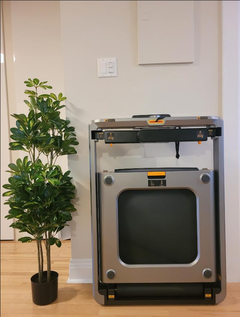
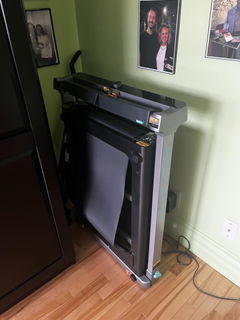
Store your treadmill upright after a session with WalkingPad's Vertical Fold series. The collection includes different running models, each with its own footprint, controls and speed range. Vertical storage can free floor area in a room that serves several purposes, but the folded height and depth still need checking. Measure your intended storage position and review the instructions for moving the machine. Then compare the running surface and operating dimensions to find a model that works both during exercise and afterwards.

FOLDABLE
Store upright

CONVENIENT
Easy to use

COMPACT
Save space

SPEED
Walk, jog & run
THE BEST OF BOTH WORLDS
There was a time when you had to choose between having a clutter-free home and getting a run at home. You shouldn't have to give up precious space to be able to stay on track with your training program. A vertically folded machine means you can have both.


AWARD-WINNING DESIGN
Our foldable treadmills and benches have earned global design awards for their innovative space-saving folding design, refined aesthetics, advanced manufacturing, and user-friendly functionality.

Red Dot Design Award for 2019, 2022, 2026

IF Design Award for 2019, 2022, 2026

Good Design Award for 2020
WHICH MODEL IS RIGHT FOR YOU?
EXPLORE OTHER PRODUCTS


Just Walk Series
Flat fold walking pads that can help you walk at ease and store under bed / sofa.

WE MAKE IT EASY

Free Shipping
Free CA shipping on orders ≥$300

1-YEAR WARRANTY
1-year warranty with optional extension available

15 Day Price Match
Price guarantee within 15 days after your purchase.

30-DAY RETURNS
Easy returns and repairs within 30 days
Conversion helper
Need Help? We're Here.
Here are the most common questions our customers have asked. Still have questions?Contact our customer support.
Vertical fold or flat fold — which storage type should I choose?
It comes down to which kind of empty space you actually have and how you want to exercise. A flat-folding machine folds down for flat storage. A vertical-folding machine stores upright and needs a taller, shallower space — such as the side of a wardrobe or a corner. Check the model’s folded dimensions rather than relying on a general size estimate.
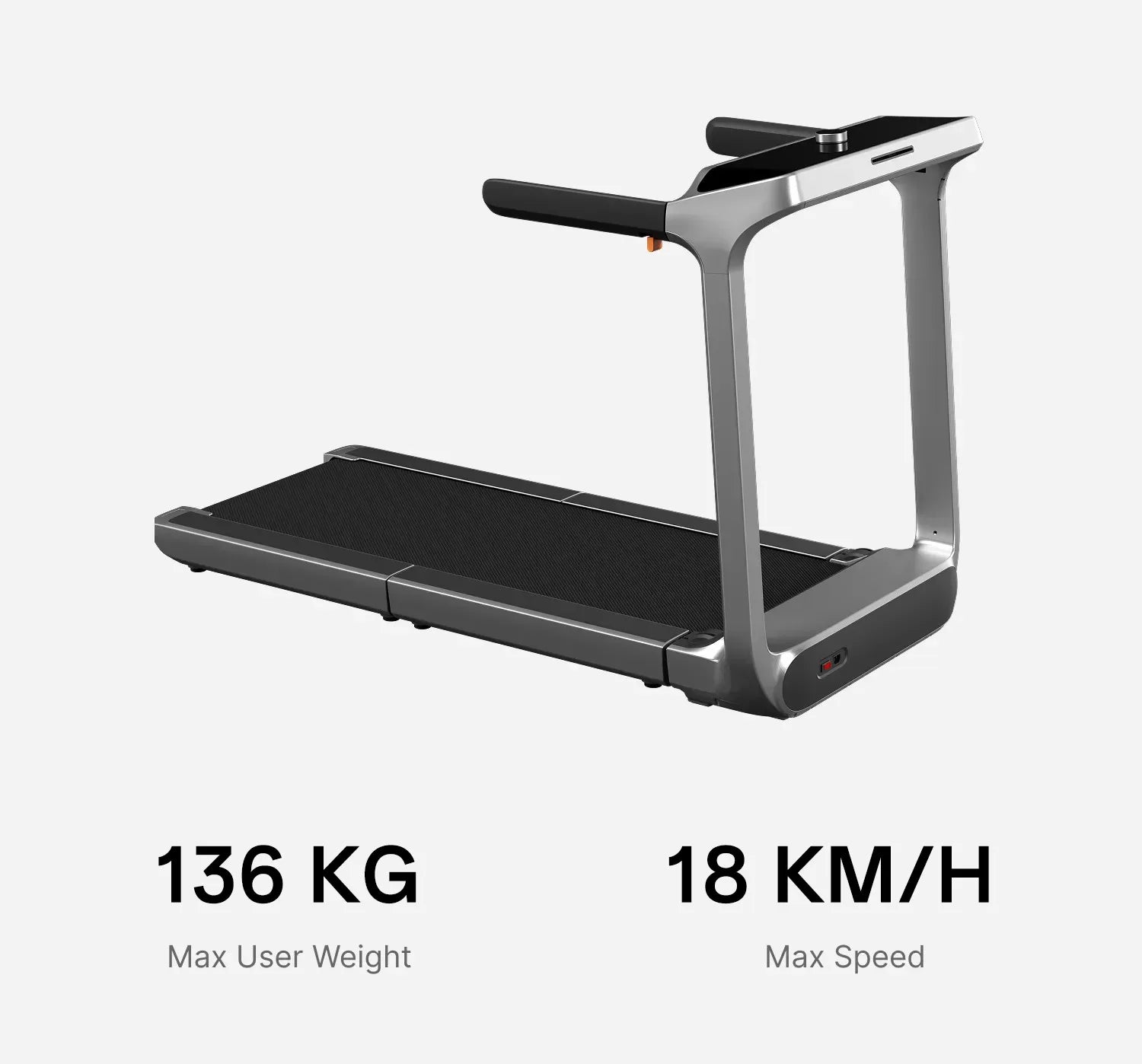
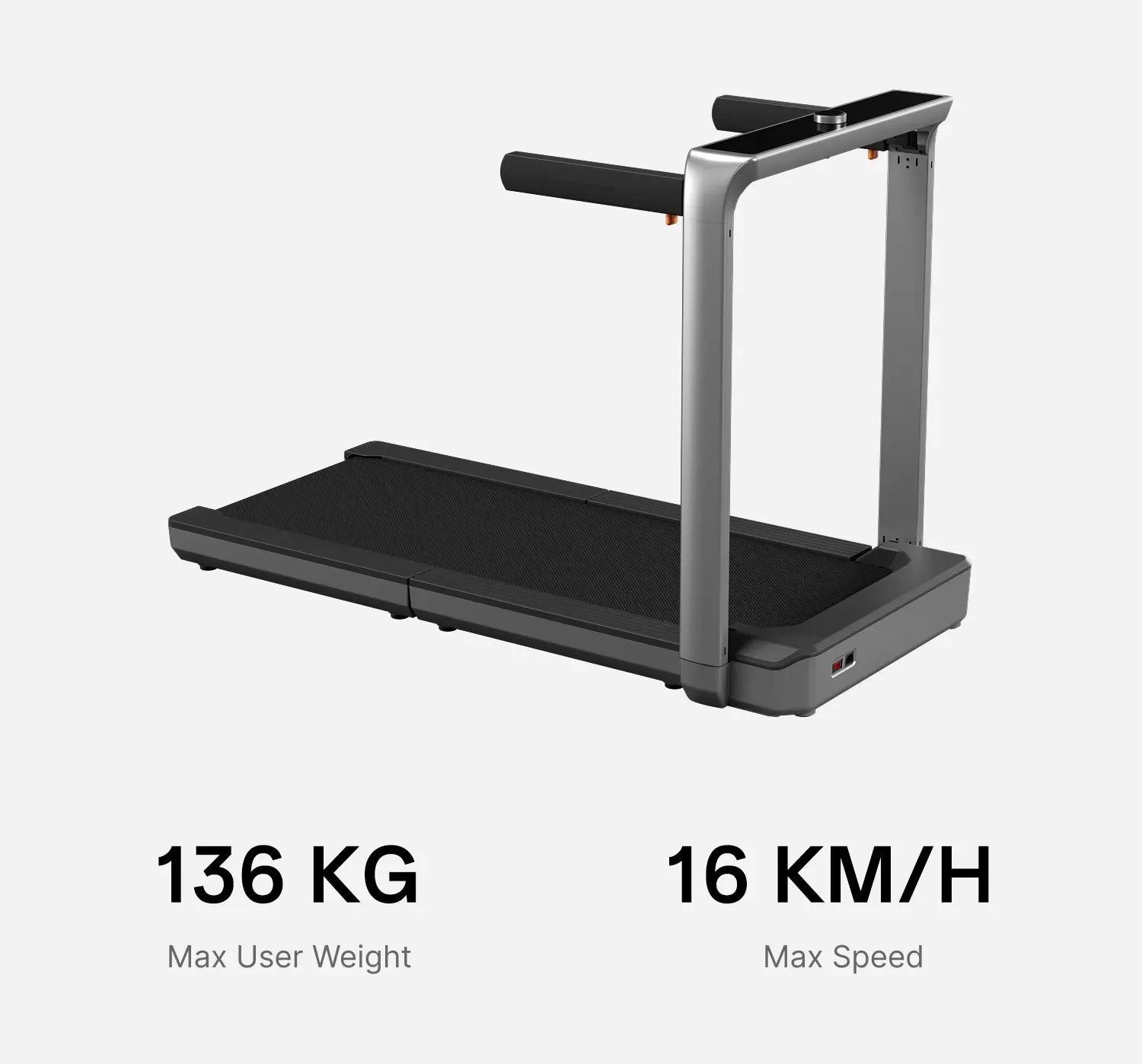
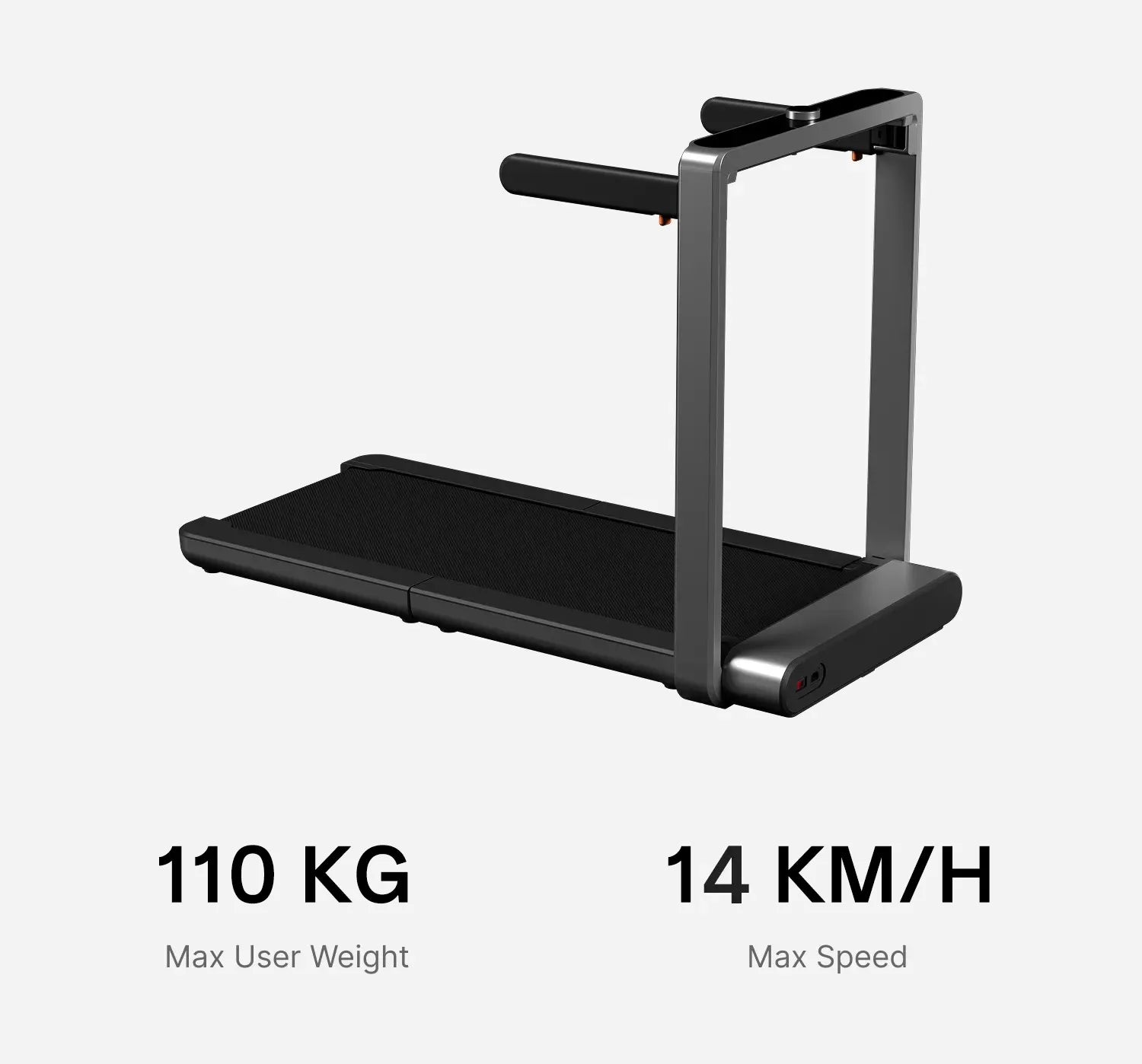
A vertical-fold machine keeps a full-size running deck, offering higher speeds and a larger running area than compact flat-folding walking pads — with options including the X21, X214 at up to 8.5 mph (14 km/h), X25 at up to 10 mph (16 km/h) with a 300 lb (136 kg) capacity, and X218 at up to 11.5 mph (18 km/h). So: if you have suitable under-furniture space, choose a model that supports flat storage; If you have corner space and want to run, consider vertical-fold models.
Are these stable standing upright, or will one tip over?
These models support upright storage when folded and positioned according to their instructions, but you should not assume they cannot tip over. Stability depends on the support base, correct folding and locking, the floor surface and any external force. The X218 locks upright for storage; follow your model’s instructions to make sure any locking or support mechanism is properly engaged. Machine weight alone — whether you choose the X218 or X25 — does not guarantee resistance to tipping.
Sensible practice regardless of model: use a firm, level surface, keep the machine clear of door swings and busy walkways, and follow the recommended storage position. If you have young children or pets, choose a location where they cannot climb on, pull or push the stored machine. If you prefer flat storage, consider a suitable model from the Just Walk collection, or another model that explicitly supports this position.
How heavy are these, and can one person fold and move one?
Folding, yes. Moving one on your own depends on the model, your strength and the route. Transport wheels help you roll the folded machine without carrying its full weight. Folding, yes. Transport wheels help you move the folded treadmill, though moving it between rooms on your own depends on the model’s weight and your strength. The X21 weighs approximately 81 lb (37 kg), and the X214 weighs 95.2 lb (43.2 kg). The heavier X25 at 104 lb (47 kg) and X218 at 129 lb (58.5 kg) may take more effort to manoeuvre between rooms. The MX8 at 73.9 lb (33.5 kg) is the lightest of these models, making it worth considering if you expect to move your treadmill frequently.
Three practical points: rolling is generally easier on smooth, hard floors than on thick carpet; fold only after the belt has fully stopped and the machine is switched off and unplugged; and guide the deck down rather than dropping it. Plan the delivery too: check the packaged weight and dimensions against your doorways, stairwell and any tight turns before ordering. For stairs or lifting, arrange help rather than attempting to carry the machine alone
Do I give up running performance by buying a folding machine instead of a fixed one?
Not necessarily. The X25 reaches 10 mph (16 km/h) with a 300 lb (136 kg) weight capacity and a machine weight of approximately 104 lb (47 kg); the X218 reaches 11.5 mph (18 km/h) with the same weight capacity and a machine weight of approximately 129 lb (58.5 kg). These specifications show that a folding design can still accommodate home running. When comparing either model with a fixed treadmill, look at maximum speed, running area, motor performance and cushioning rather than assuming a fixed frame performs better.
For home running, check that the belt length and width suit your stride at your intended speed, alongside the machine’s weight capacity and recommended usage. The running area is listed on each product page. Buy on those specifications and your training needs rather than on the fold type alone
What clearance do I need — will it fit in a closet?
It can fit in a closet if the available space accommodates the model’s folded dimensions. Measure three things rather than one. Stored height: check the clearance beneath any hanging rail or shelf. Stored depth: make sure the folded machine fits with the closet door closed. Stored width: compare the model’s folded width with both the space inside and the clear doorway opening. Use the dimensions listed on the individual product page rather than a general estimate.
In use, follow your model’s manual for the required clear space behind and beside the treadmill. If you plan to use it in a basement with a low or sloped ceiling, account for the deck height, your height and the additional headroom you need while running.